I got the job! I’ve always worked remotely as a freelance software engineer, building software for clients around the world. Even with that experience, it took me almost nine and a half months to land my new remote full-stack AI engineer role. Here’s the funny part. I can happily spend five minutes explaining how I stopped a phone interpreter from translating its own voice. Put “Tell us about yourself” in an application form, though, and suddenly I’m a “motivated individual with a passion for technology.” Where did the interesting guy go?
Freelancing taught me how much easier a conversation gets when I can say, “Here, try it.” You can give a hiring manager that experience before you’ve had your first paying client. Here’s how I’d turn one small project into an application and an interview story.
1. Find three remote jobs you could actually take
When I look at a remote role, I check two things early. Where can the team hire, and which hours would we need to share? Remote Worldwide helped me land my role. I’d start with its worldwide listings, then check those two details in the employer’s own posting before spending an evening on the application.
Try this today. Pick one job title, save three openings that fit your location and level, and underline a task that appears twice. If two junior frontend roles mention forms and APIs, you’ve found your project brief. Close the other tabs. Yes, even the one with the lovely careers page.
2. Build one feature a stranger can try
At Doreti, I designed the backend’s microservice architecture and built both the services and the jewellery storefront they power. A shopper sees a ring, picks a size and taps “Add to cart.” As the engineer, I care about whether the size they picked is the one that actually lands in the cart. For a first portfolio project, I’d take one small problem from that flow. If size 7 sells out, can the shopper leave an email for that exact size?
Build that stock-alert form and put the demo online. Then hand it to a friend and keep quiet. Ask them to sign up for size 7, turn off the Wi-Fi and try again. Do they lose the size they picked? Do they know whether the request went through? Fix the first thing that trips them up. One screenshot and a few lines about that fix give you something real to put on your CV.
3. Open your application with the part worth clicking
Give the demo a spot under Projects on your CV. In the application, connect one detail from the job description to one thing the reviewer can try. If you built the retry behaviour above, here’s how I’d open.
Your junior frontend role mentions improving signup forms. I built a stock-alert form that remembers the shopper’s ring size if their connection drops. Pick size 7 in the demo, go offline, then reconnect and hit retry. Your selection will still be there.
I want to click that link just to see if it works. Give the reviewer that chance. Test your demo in a private browser window before you send it. “Request access” is a disappointing plot twist.
4. Practise the question your demo invites
At FourPoints, I worked on a phone interpreter. I could describe it by listing Twilio, Node.js and AWS, but here’s the bit I like talking about. The interpreter’s own audio could come back through the call. If it treated that as fresh speech, it could start translating itself. I made listening and speaking take turns. The trade-off was that a caller who spoke over the interpreter could be missed.
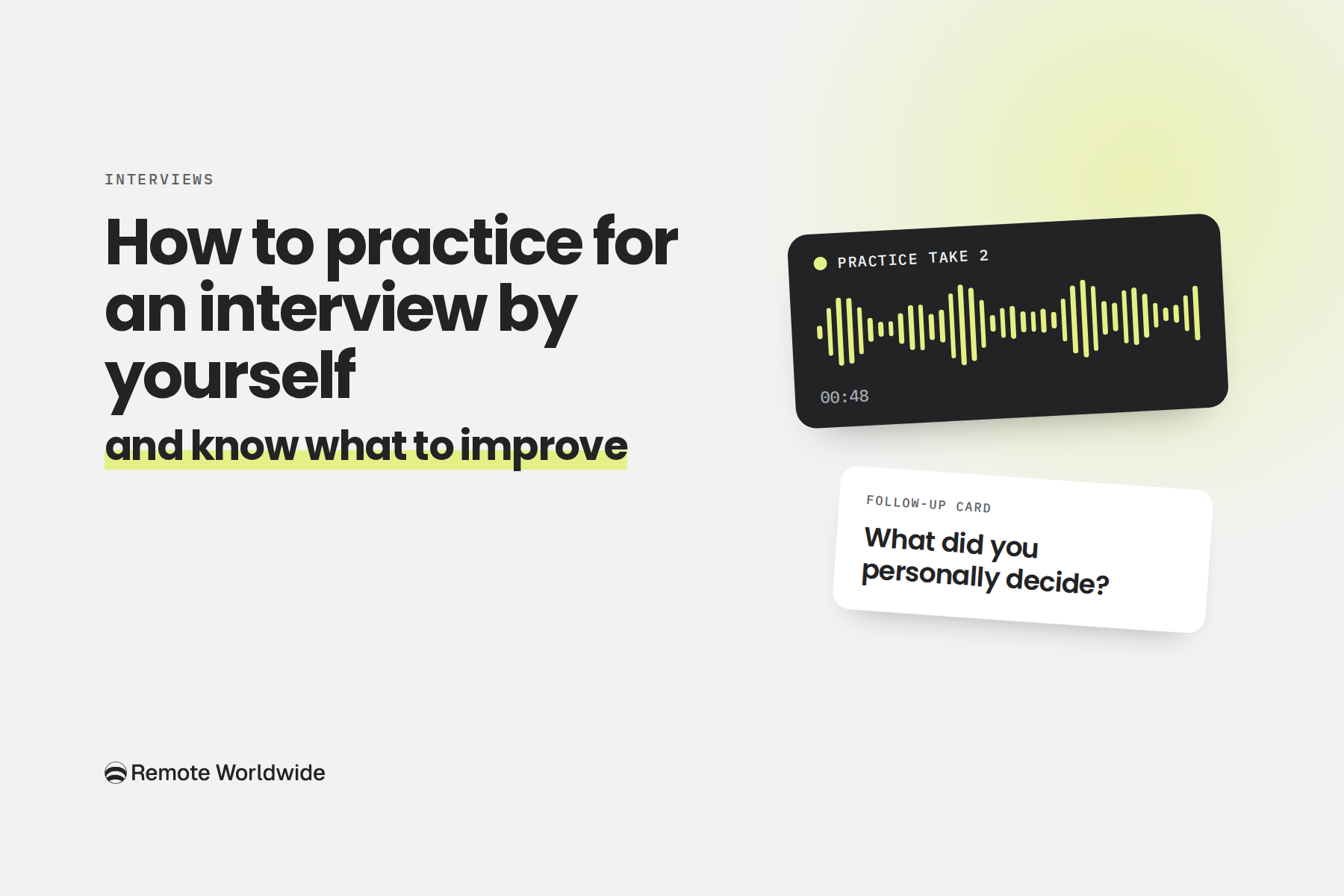
Record a 90-second voice note explaining one decision in your project. What did the user need? What could go wrong? Why did you choose that fix? Then let a friend ask one follow-up. For the ring demo, I’d ask, “What happens if I hit retry twice?” If you’re unsure, try it. You’ll have a better answer tomorrow and, quite possibly, a bug to fix tonight.
5. Use Friday to pick one change for Monday
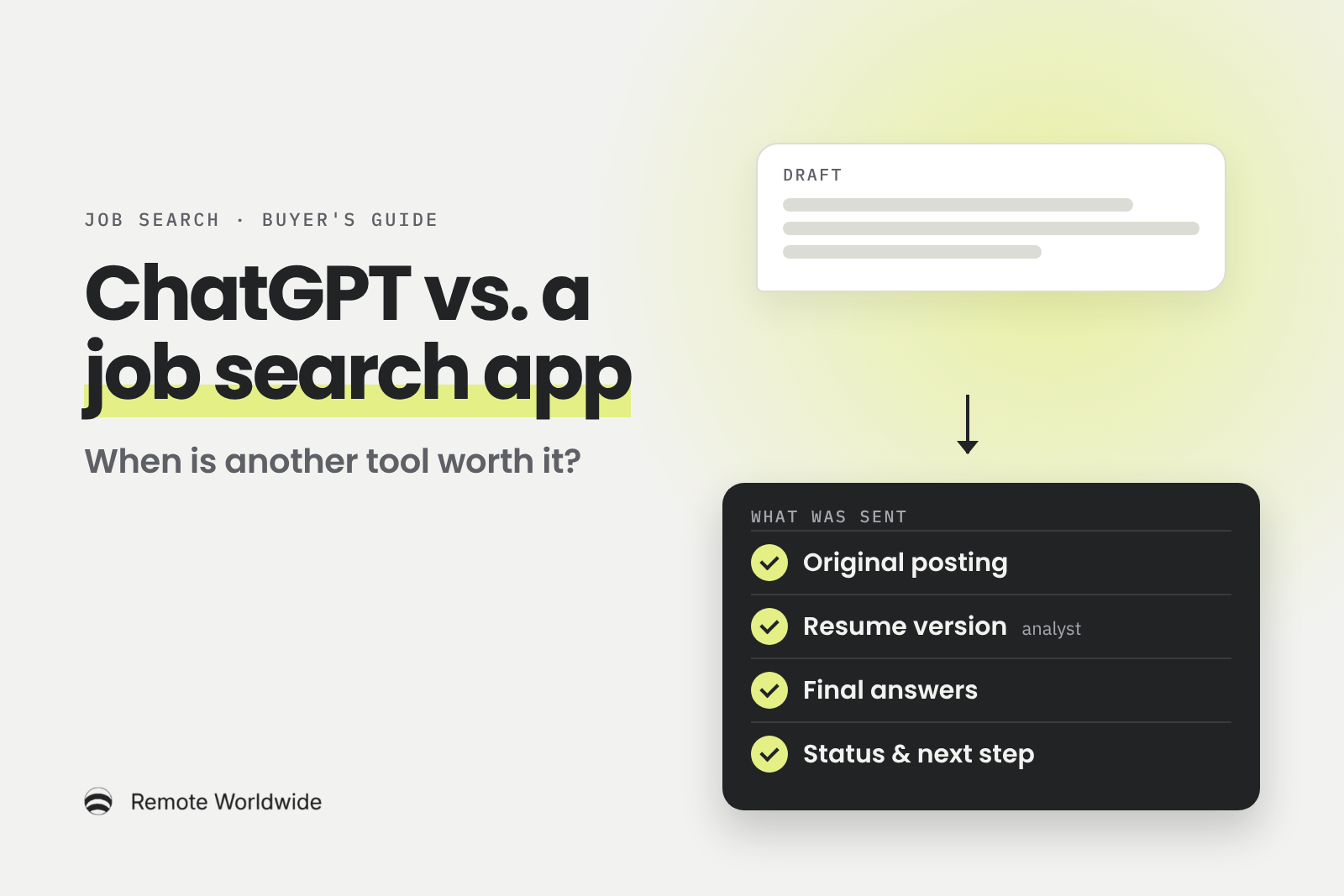
During my search for a full-stack AI role, “Why haven’t I landed an offer yet?” was a much bigger question than I could do anything with on a Friday afternoon. Give yourself a smaller one. Keep a list of the role, the project you sent, the last reply and your next action. If you keep finding location restrictions, change where you look. If eligible applications go quiet, ask a friend to read one beside the job description and point to the strongest match. If interviews stall, practise the question that caught you out.
I’m still buzzing about the offer. If you’re reading this with an empty Experience section, here’s what I’d love you to do with the next twenty minutes. Pick one worldwide opening and finish the sentence “By Sunday, I can show this team how I’d ___.” A form that remembers a ring size is a perfectly good answer.